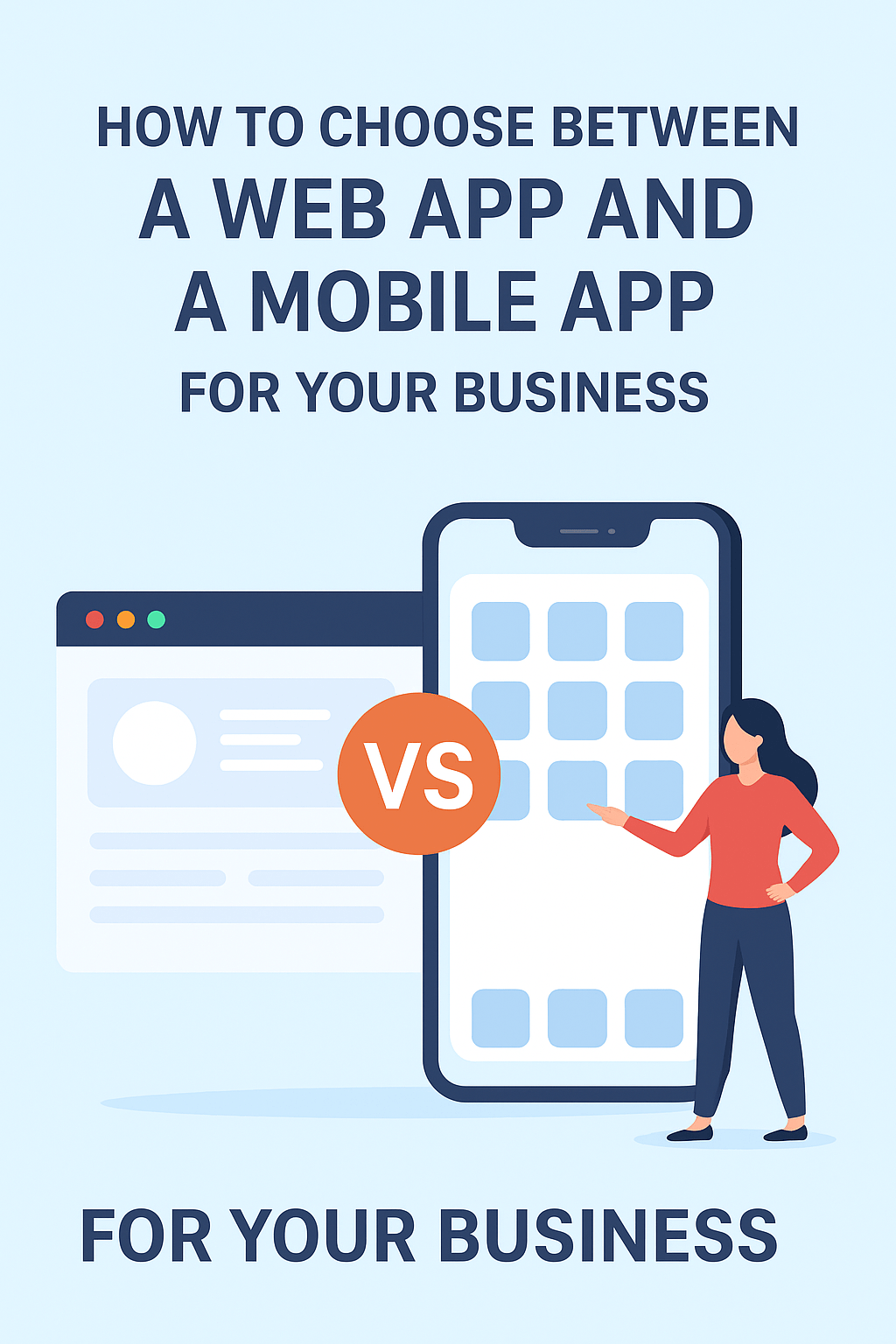
📱 How to Choose Between a Web App and a Mobile App for Your Business
Introduction
In today’s digital-first world, every business needs an app — but deciding what kind of app can be confusing. Should you build a web app or a mobile app? Each has unique advantages depending on your audience, budget, and goals.
At Codalaya ER Works Pvt. Ltd., we help businesses across industries choose and build the right app solutions that drive engagement and growth. Let’s explore the key differences and how to make the best decision for your brand.
1. What is a Web App?
A web application runs on a web browser and can be accessed via URLs — no download required.
Examples: Google Docs, Trello, or Slack Web.
Advantages:
-
Accessible from any device with a browser
-
No installation needed
-
Easier updates and maintenance
-
Lower development cost
Limitations:
-
Requires internet connection
-
Limited access to phone hardware (camera, GPS, etc.)
-
Slower performance compared to native mobile apps
At Codalaya, we design responsive, cloud-based web apps that look and perform flawlessly across all devices.
2. What is a Mobile App?
A mobile app is a downloadable software built for Android or iOS. It provides richer, faster, and more personalized user experiences.
Examples: Instagram, WhatsApp, Uber.
Advantages:
-
Offline functionality
-
Better performance and user engagement
-
Full access to device features
-
Push notifications for real-time updates
Limitations:
-
Higher development and maintenance cost
-
Requires App Store/Play Store approval
-
Different versions needed for Android and iOS
At Codalaya ER Works Pvt. Ltd., we develop native and cross-platform mobile apps using technologies like Flutter, React Native, and Kotlin — delivering smooth, scalable, and secure experiences.
3. The Hybrid Approach: Best of Both Worlds
Sometimes, you don’t need to choose one or the other. Hybrid and cross-platform frameworks allow you to run the same codebase on both web and mobile devices.
Popular frameworks: Flutter, Ionic, React Native.
Benefits:
-
Reduced development cost and time
-
Consistent user experience across devices
-
Easier updates and maintenance
Codalaya’s Edge: We use hybrid frameworks to deliver faster MVPs without compromising on performance or design.
4. Progressive Web Apps (PWAs): The Game-Changer
A Progressive Web App (PWA) acts like a mobile app but runs in a browser. It can be added to the user’s home screen and works offline — a smart, cost-effective middle ground.
Why businesses love PWAs:
-
Faster loading times
-
Offline caching
-
Push notifications
-
No app store approval needed
Our team at Codalaya has helped clients launch PWAs that outperform native apps in engagement while saving up to 40% in costs.
5. Factors to Consider Before Deciding
Here’s how to choose between a web app and a mobile app:
| Factor | Web App | Mobile App |
|---|---|---|
| Budget | Lower | Higher |
| Performance | Moderate | Excellent |
| Offline Access | Limited | Full |
| User Engagement | Moderate | High |
| Maintenance | Easy | Complex |
| Hardware Integration | Limited | Full |
If your business aims for broad reach and quick deployment, start with a web app or PWA.
If your focus is on engagement, loyalty, and rich experiences, go for a mobile app.
Conclusion
The “web app vs mobile app” decision depends on your goals — there’s no one-size-fits-all answer. The best choice is the one that aligns with your users, budget, and long-term strategy.
At Codalaya ER Works Pvt. Ltd., we don’t just build apps — we build digital ecosystems that help businesses scale and succeed.
💬 Ready to Build the Perfect App?
Whether you need a responsive web app, a native mobile app, or a cross-platform solution, Codalaya can help.
Our expert team will guide you from idea to launch — ensuring performance, design, and business impact.
📞 Contact us today to discuss your next app development project.
🌐 www.codalaya.com